RB / Rishabh Banga
Product, AI, systems
01 Position

AI product leader / operator / speaker

The hard part of AI is not the model.
It is the system around it.

I help teams turn AI capability into products and workflows people can trust, adopt, and measure in production.

AI Product Manager · Head of Product & Growth · Founder · Ericsson

Toronto / open to the right conversation 2026
02 Point of view

A practical position on AI-native product work

AI should increase the quality and speed of product judgment, not replace customer understanding.

That means treating governance, workflow design, observability, escalation, and economics as product work. The interface is only one part of the thing users experience.

01Make the workflow legible.People need to know what the system did, why, and what happens next.
02Make trust operational.Controls and signals belong in the product, not in a policy appendix.
03Measure the whole system.Adoption, quality, latency, cost, and failure states are one product conversation.
03 Operating arc

The connective tissue

From signal
to shipping.

Product work is a sequence of decisions. The job is to make that sequence clearer, faster, and safer as the system gets more capable.

01ObserveFind the real signal.
02FrameName the decision.
03BuildMake the smallest system.
04ValidateExpose failure early.
05RunMeasure what matters.
04 Product vision

Proof in systems, not slogans

Product vision becomes real when it changes the system, not just the screen.

01 / Situation

Kampd

As community participation grows, discovery, ranking, and moderation can stop feeling fair—while manual review cannot keep pace.

Task Make trust and discovery scale without losing the community’s signal.

Action Mapped member and moderator needs; prioritized ranking, review, real-time signals, and escalation; tested fairness–speed trade-offs; set clear decision rules.

Results

25%activation lift
40%less manual review

What this proves

Growth and governance reinforce each other when they run on the same signals.

02 / Situation

TravelTech marketplace

People arrived with travel intent but dropped before booking; the journey, handoffs, and decision points were fragmented.

Task Turn travel planning into a reliable path from intent to booking.

Action Mapped planner journeys and drop-offs; prioritized onboarding and booking blockers; tested pricing and packaging; aligned CRM, payment, and partner-data flows.

Results

20 → 31%activation in three weeks
+30%click-to-booking conversion

What this proves

Activation improves when the whole journey removes decision friction—not just the first screen.

03 / Situation

Copart AI operations

Seller and support teams were handling repeatable, high-volume operational work where inconsistent decisions and escalation gaps created drag.

Task Give operations AI assistance that could act safely at scale.

Action Analyzed 100K+ interactions; selected repeatable, high-value workflows; built voice and text agent paths; set guardrails and escalation with legal, engineering, and operations.

Results

+30%throughput across seller and operations workflows

What this proves

Automation scales when workflow, guardrails, escalation, and ownership are designed together.

Explore five more case studies

04 / Situation

AI Avatar EdTech

Students and educators needed an AI learning experience that could do more than attract curiosity—it had to create real value worth returning to.

Task Build an LLM-powered learning product that improved adoption and learning quality.

Action Designed tutor workflows and prompt orchestration; added evaluation loops; segmented high-value users; aligned onboarding, packaging, and pricing to proven demand.

Results

16 → 26%conversion

What this proves

AI product mechanics create value when adoption design and quality loops are part of the system.

05 / Situation

NASA airport movement

Congested airports such as SFO need ground-movement decisions that account for complex, real-world constraints—not just model accuracy in isolation.

Task Turn an ML-driven graph optimization approach into an operable research-to-product workflow.

Action Led a practicum with researchers and six developers; built Kubeflow, Airflow, and MLflow pipelines; wrote the product specification and statement of work; structured delivery cadences.

Results

+40%training data
−80%build time

What this proves

Research becomes useful only when the data, workflow, and delivery system are designed together.

06 / Situation

Microsoft Surface onboarding

Future device onboarding needed AI-powered recommendations without compromising privacy, security, accessibility, localization, or platform scale.

Task Shape a responsible recommendation experience and a repeatable integration model for the Surface ecosystem.

Action Scoped recommendation opportunities; aligned customer value with privacy and platform requirements; established the first Microsoft-branded device integration model for future OEM expansion.

Projected opportunity

$0.5Brevenue potential
+25%engagement potential

What this proves

Responsible AI is not a review step—it is a product constraint that shapes what can scale.

07 / Situation

Hacker’s Tribe

Students, mentors, and institutions needed a more structured way to find opportunities, collaborate, and turn learning into career momentum.

Task Build an AI-powered learning marketplace that could scale across institutions.

Action Designed ranking, matching, and monetization systems; turned hackathons, workshops, and mentorship into repeatable product workflows; partnered with Intel and academic institutions.

Results

10K+users
+20%participation and retention

What this proves

Community scale comes from repeatable learning and matching systems, not one-off programming.

08 / Situation

Ericsson reliability systems

Telecom-scale BSS infrastructure needed stronger visibility, incident response, and governance across multi-region operations.

Task Improve reliability and operating efficiency across critical services.

Action Built observability with Splunk and Tableau; automated compliance and workflow controls; improved CI/CD and internal tooling; optimized system-level performance.

Results

−25%downtime
−60%operating cost

What this proves

Reliability is a product capability when visibility, automation, and accountability are designed into operations.

05 Product teardowns

Finding the friction beneath the feature

Small product decisions can quietly change the whole experience.

Two original product-improvement studies: one examines a tangled feature journey; the other isolates a level-based friction point.

Pokémon Go Routes error screen used in the product teardown

01 / Mobile game / UX teardown

Pokémon Go

Routes & Team Rocket

How two adjacent features create a multi-step experience that needs clearer recovery and continuity.

Read the product brief
War Dragons product improvement study placeholder

02 / Mobile game / UX teardown

War Dragons

Unintended level friction

Tracing the unnecessary resistance a player encounters when progress rules get in the way of momentum.

Study details available on request
06 Public work

Talks / events / workshops

Ideas become useful when they can travel.

Rishabh translates complex AI-system questions into language that PMs, operators, builders, and communities can use.

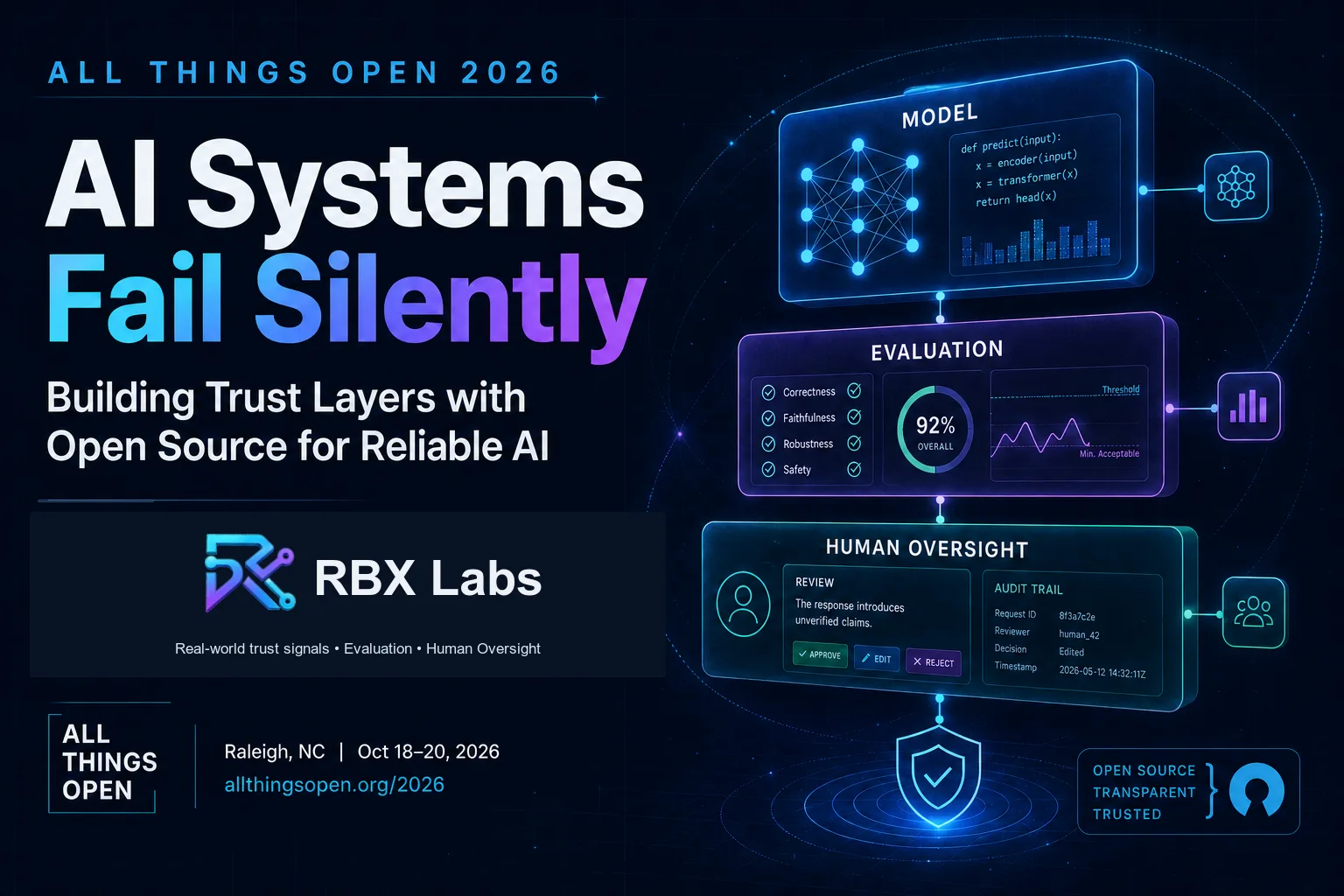
All Things Open 2026 talk: AI systems fail silently
Open-source AI / All Things Open 2026

AI Systems Fail Silently

Building trust layers with open source for reliable AI.

Event profile
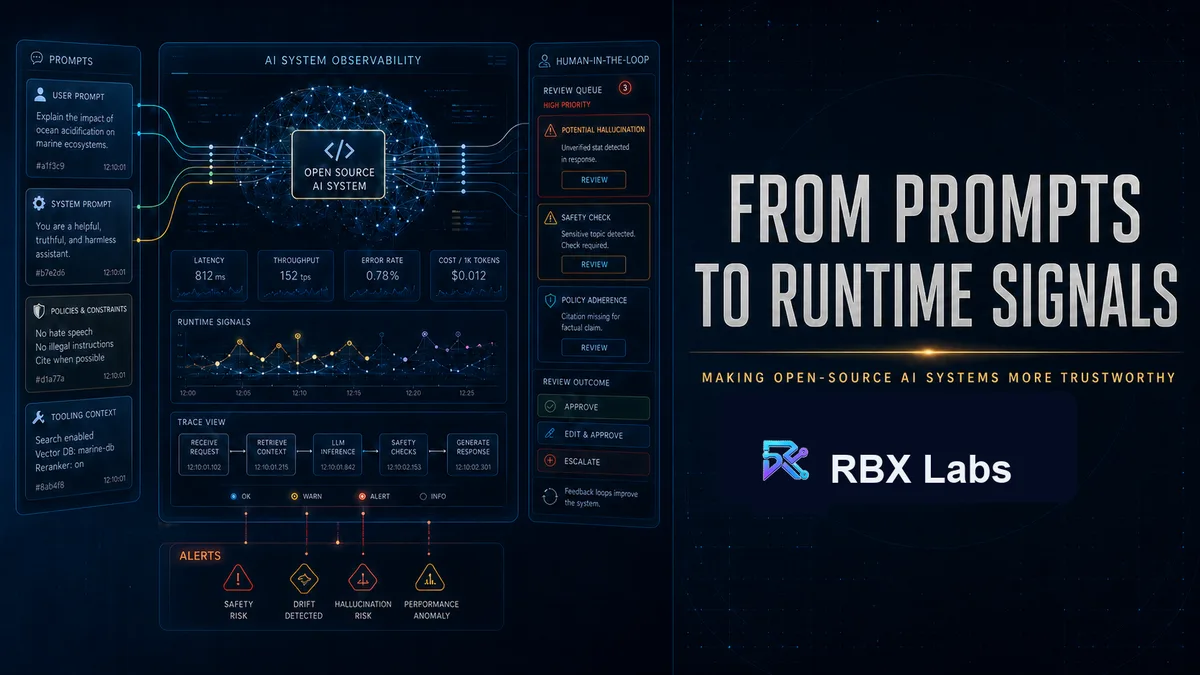
FOSSY 2026 talk: From prompts to runtime signals
Open-source AI / FOSSY 2026

From Prompts to Runtime Signals

Making open-source AI systems easier to evaluate, monitor, and trust.

Schedule
IEEE World Forum tutorial poster
Trustworthy AI / IEEE WF-PST 2026

Trustworthy Agentic AI

Evaluation gates, escalation paths, and human review for public-safety workflows.

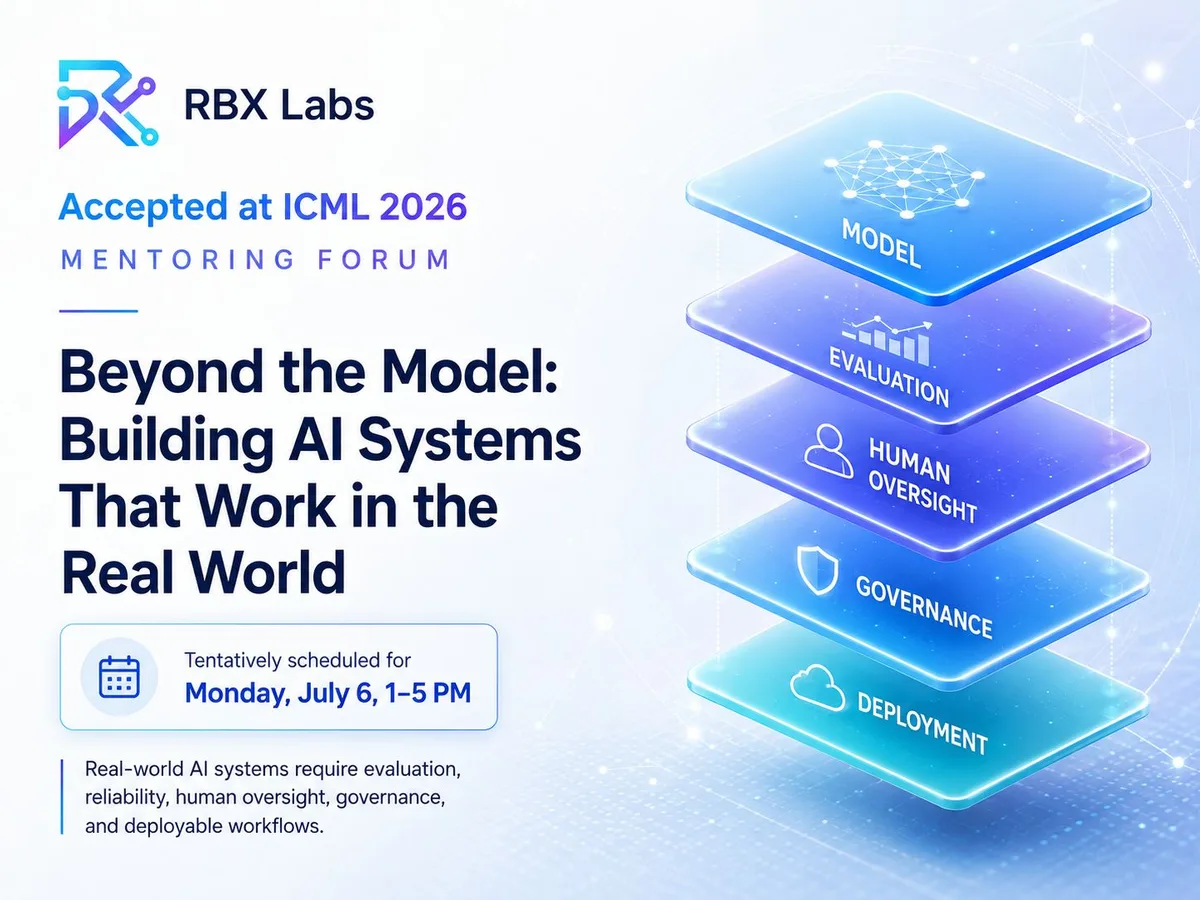
ICML 2026 mentoring forum poster
Real-world AI / ICML 2026

Beyond the Model

Building AI systems that work in the real world.

YSpace AI employee workshop poster
Founder training / YSpace

Hiring Your First AI Employee

Delegating real work to agents without losing judgment or control.

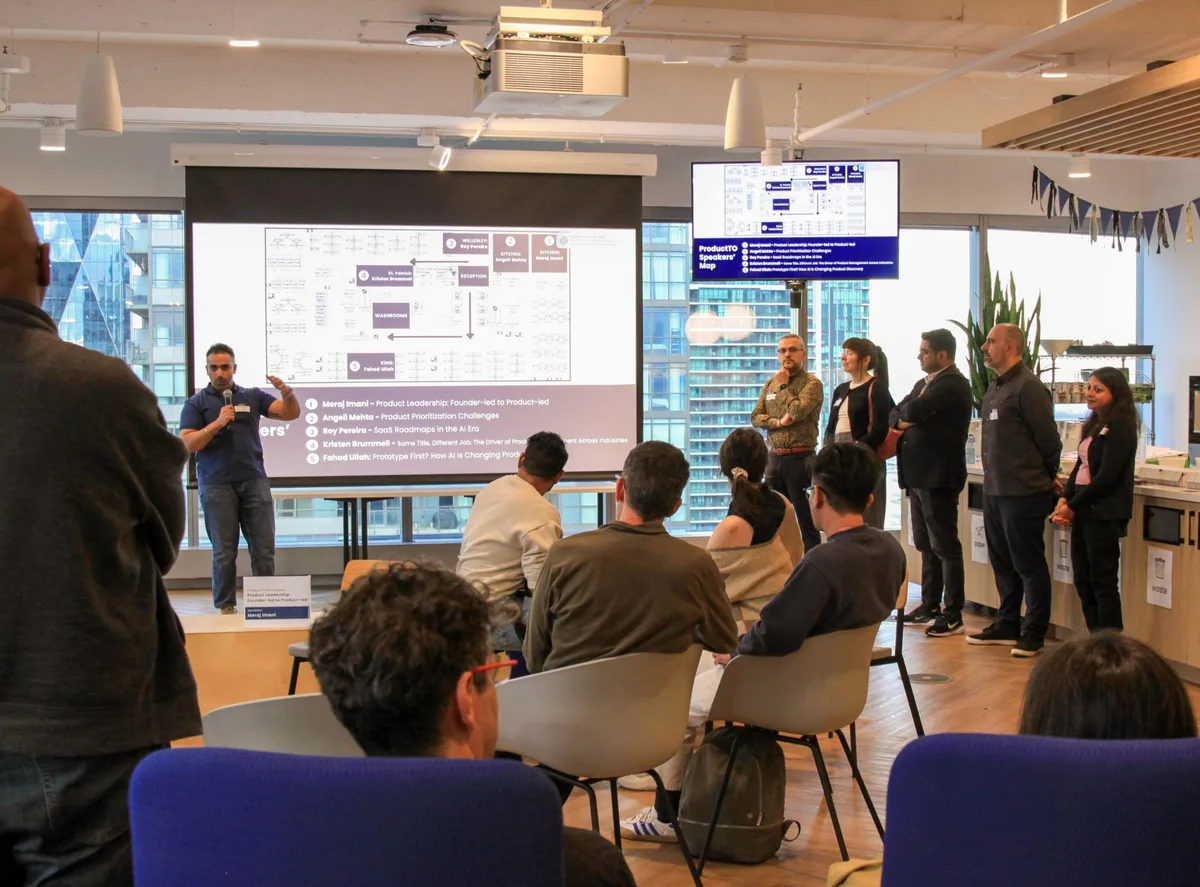
Toronto Product Management Association event poster
Product leadership / TPMA

Practice PMing Multiple Products

Focus, prioritization, and decision-making across several products.

Stanford Code in Place poster
Teaching / Stanford University

Code in Place

Section lead for Stanford’s introductory Python course, supporting live problem-solving and debugging.

07 Writing

Articles / public dialogue

Ideas become stronger when they can be examined in public.

Technical systems work, governance, and the evidence required to make both credible in practice.

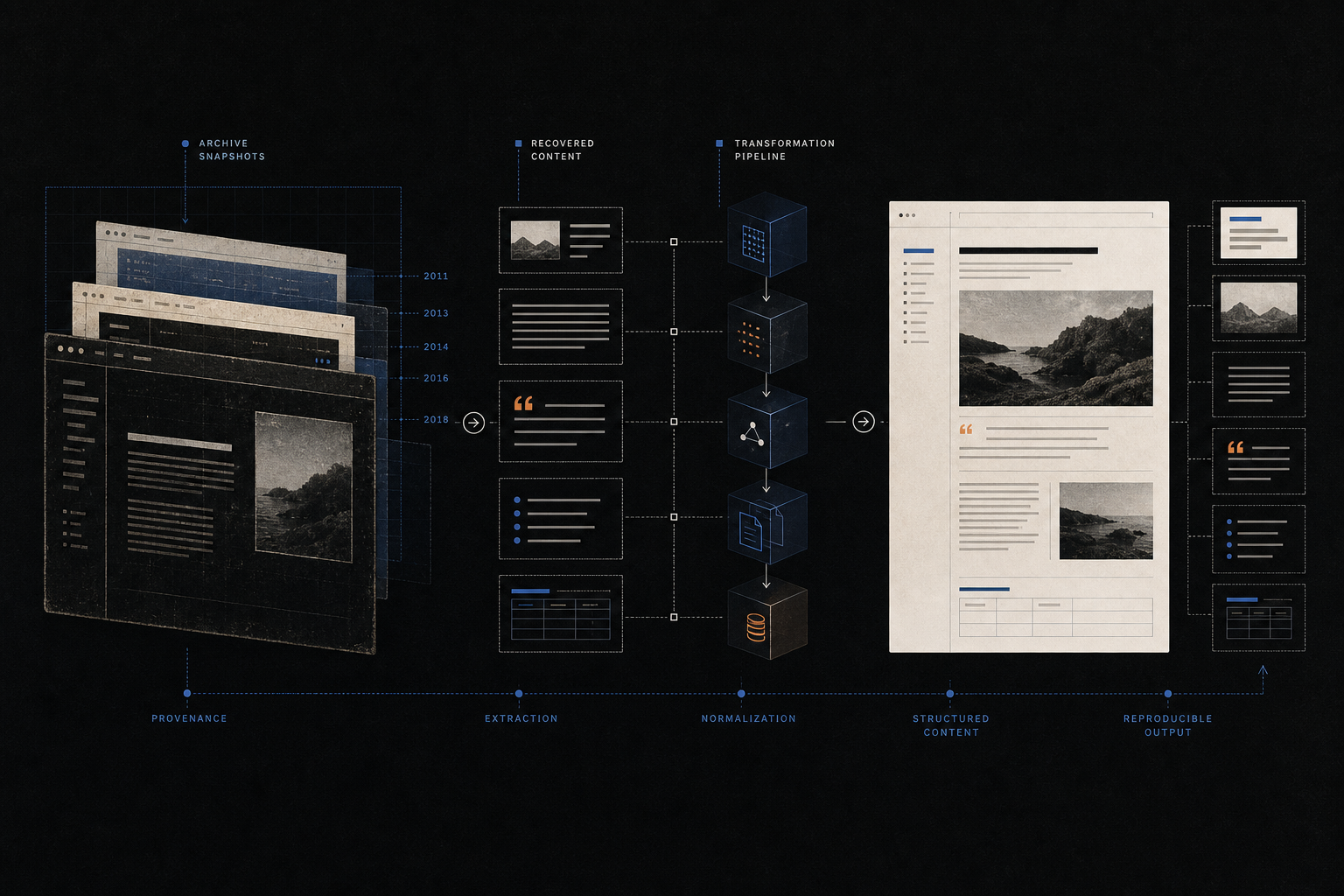
Featured technical essay
All Things Open · April 2026 · 5 min

From Wayback to WordPress: Designing a recovery pipeline for archived sites

The Wayback Machine saves content. This pipeline makes it usable—turning an archived site into a reproducible, WordPress-importable system.

Read article

Apply AI Alliance

A two-part argument for verifiable AI governance.

European Commission community forum
Some community content may require platform access.

AI governance / June 2026

From Policy to Proof: Why AI Governance Needs Verification Layers

Governance needs runtime evidence—not only documentation.

Read article

Human oversight / June 2026

From Human Oversight to Oversight Proof

Human review matters only when meaningful control can be shown.

Read article
08 Experience

Where the work has been practiced

A career across products, platforms, and applied systems.

Apr 2025 — presentRBX Labs

AI Platform & Workflow Systems Consultant

Apr — Nov 2025Stealth Startup

Product Consultant, GenAI + TravelTech

Aug 2024 — Apr 2025Copart

AI Product Manager

Jan 2023 — Jul 2024Stealth Startup

Head of Product & Growth, AI Avatar EdTech

Feb 2020 — Aug 2021Hacker’s Tribe Foundation

Founder / Chief Product Officer

Aug 2015 — Jan 2020Ericsson

Senior Software Engineer, R&D

09 / Contact

Have a hard AI product problem?

Speaking, advisory, product strategy, and conversations about making AI useful in the real world.

rishabhbangaa@gmail.com